
How to Identify WW2 British Medals and Ribbons
The Second World War was a defining moment in world history, and millions of young men bravely fought for their countries on the frontlines. As a symbol of gratitude for their selfless service and sacrifice, soldiers were awarded medals, each medal has a specific meaning, be that where it was earned or for a particular service. For collectors and descendants of veterans alike, understanding the significance of each medal is key to appreciating its historical value.
This comprehensive guide explores the campaign medals, ribbons, and clasps awarded to British soldiers during World War II, shedding light on their stories of courage and heroism. Whether you're a collector or a curious family member looking to learn more, this guide should offer a base view into each medals history and a glimpse into the legacy of these brave soldiers and the medals they earned on the battlefield.
WW2 British Campaign Medals
There were eight campaign stars awarded to British soldiers during World War II with each star represented a different campaign plus the War and Defence Medal. The first star being the 1939-1945 Star awarded for six months of service in any operational command. Then the Africa Star, Burma Star, Italy Star, and France and Germany Star were awarded for service in specific theatres of war, while the Atlantic Star was awarded for service in the Battle of the Atlantic. The Arctic Star and the Air Crew Europe Star were awarded for service in specific environments.
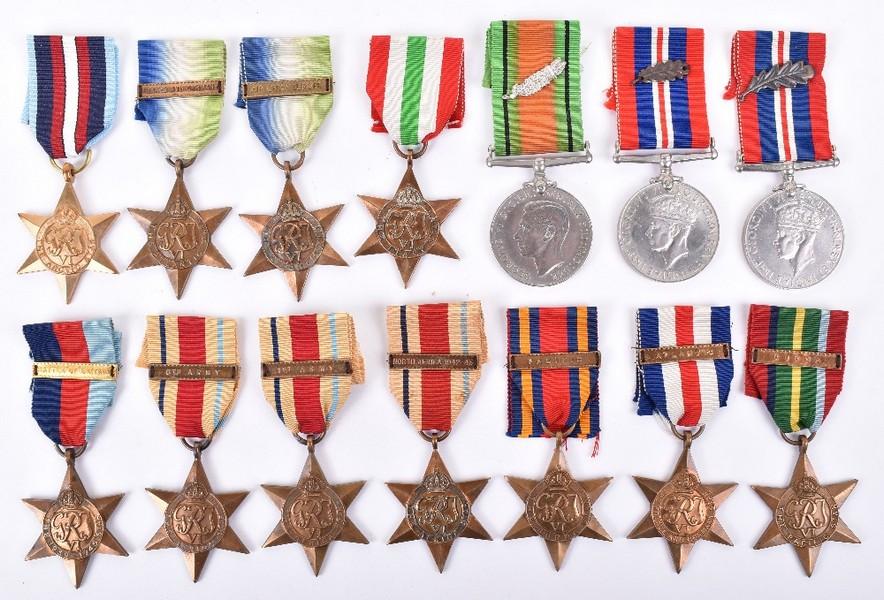
Selection of WW2 British Campaign Medals — Photo credit: C&T Auctioneers
British medals were not issued with the recipients name (unlike WW1) however some commonwealth countries did continue the tradition. The personalised stars would bear the soldier's name and the campaign in which they served, such as El Alamein, Monte Cassino, D-day etc. These personalised stars serve as a testament to the individual soldiers' contribution to the war effort, making them a valuable collector's item for families of veterans.
The War Medal
The War Medal 1939–1945 was instituted by the United Kingdom on 16 August 1945. It was awarded to citizens of the British Commonwealth who had served full-time in the Armed Forces or the Merchant Navy for at least 28 days between 3 September 1939 and 2 September 1945. The medal was awarded to all full-time personnel of the armed forces and Merchant Navy for serving for 28 days, irrespective of where they were serving, between 3 September 1939 and 2 September 1945 inclusive, the full duration of the Second World War. In the Merchant Navy, the 28 days had to have been served anywhere at sea. Foreign citizens commissioned or enlisted into British Forces, who did not receive a similar award to the War Medal 1939–1945 from their own Governments, were also eligible to qualify for the award of this medal.
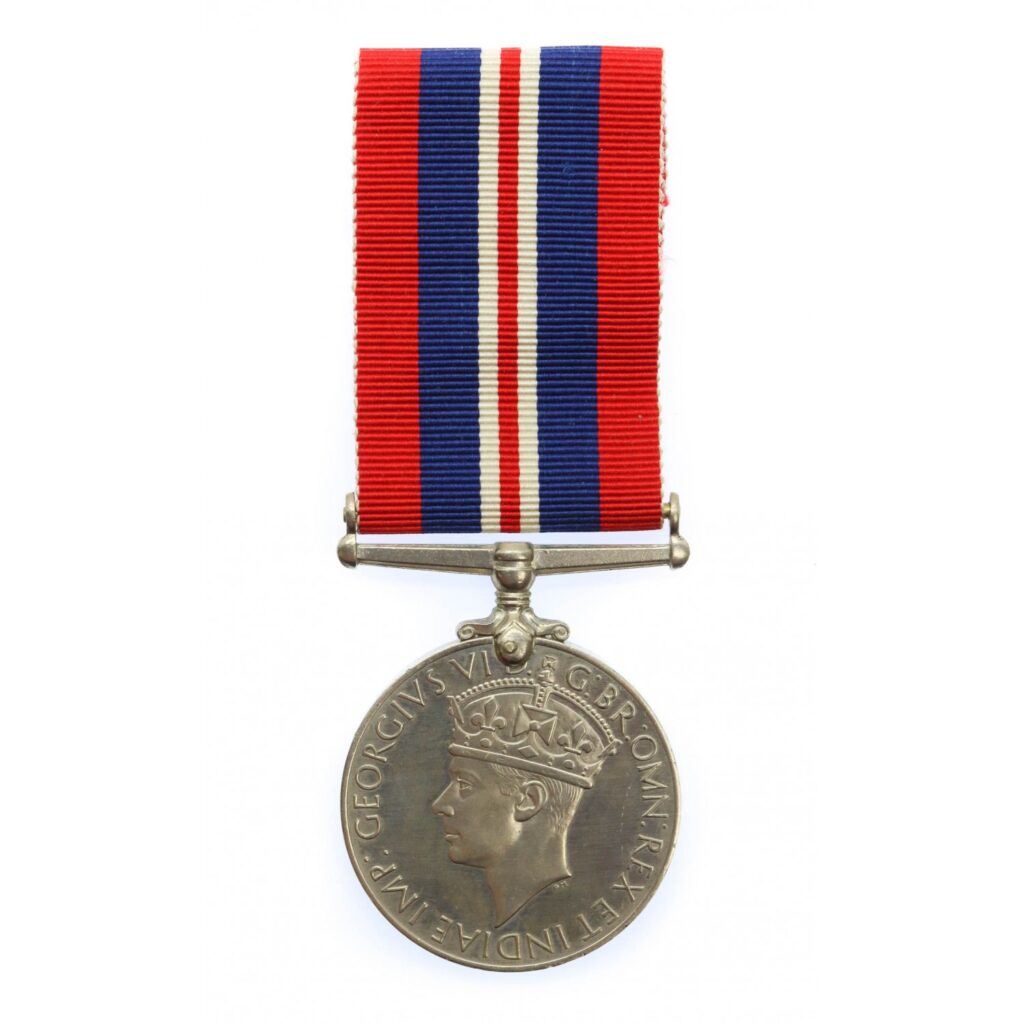
Original WW2 War Medal — Photo Credit: Cultman Collectables
The qualification requirement for the award of the War Medal 1939–1945 to full-time military personnel was 28 days of service, wherever rendered. Qualifying service in the Merchant Navy was 28 days of service anywhere at sea during the qualifying period. Full-time paid members of the specially approved colonial and other military forces, militarized police or militarized civilian bodies which were eligible to qualify for campaign stars, were also eligible to qualify by 28 days of service during the qualifying period.
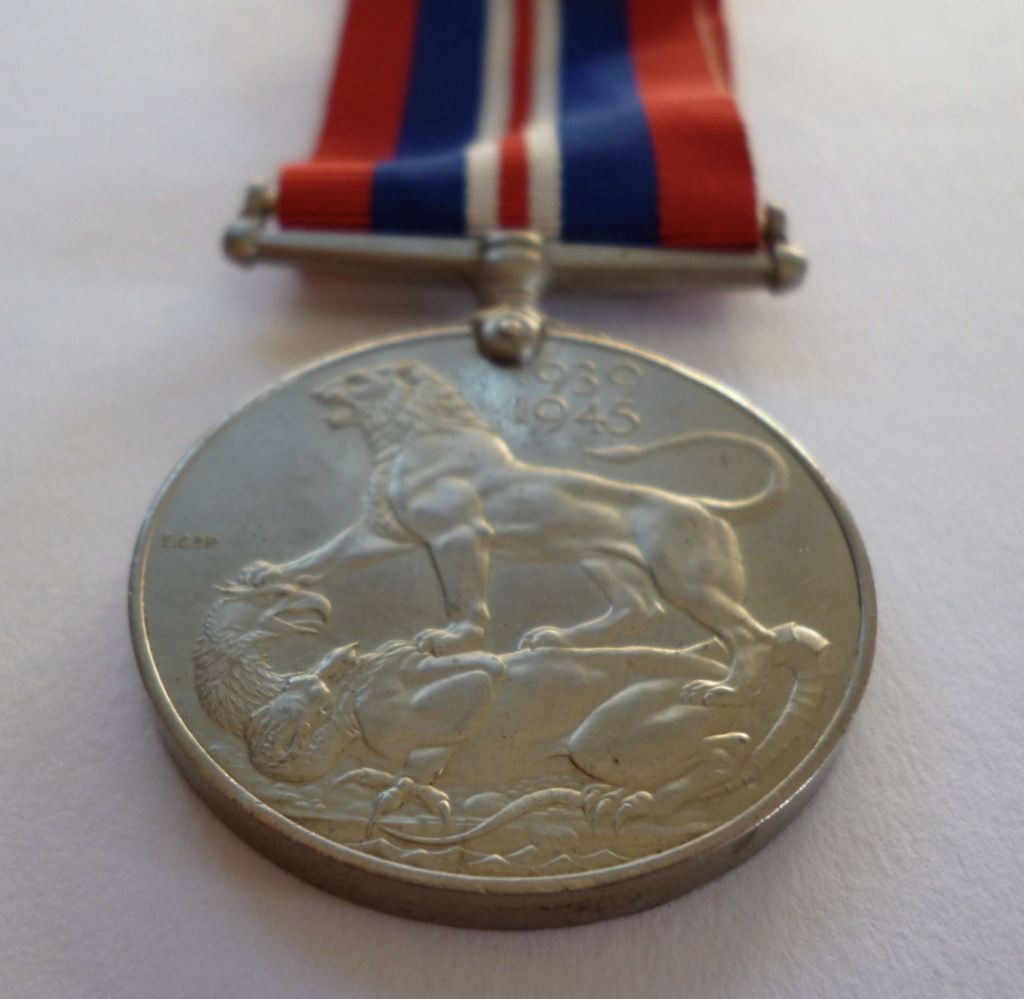
Original WW2 War Medal — Photo Credit: Chester Medals
The Defence Medal
The Defence Medal was established by the United Kingdom in May 1945 to recognize non-operational military and certain types of civilian war service during World War II. The medal was awarded to British military and civilian personnel, as well as to Commonwealth and British Colonial personnel who served in non-operational areas or in areas subject to threat. The medal was awarded for a range of services, including service in the Armed Forces, the Home Guard, the Civil Defence Service, and other approved civilian services between 3 September 1939 and 8 May 1945 (2 September 1945 for those serving in certain specified territories in the Far East and the Pacific).
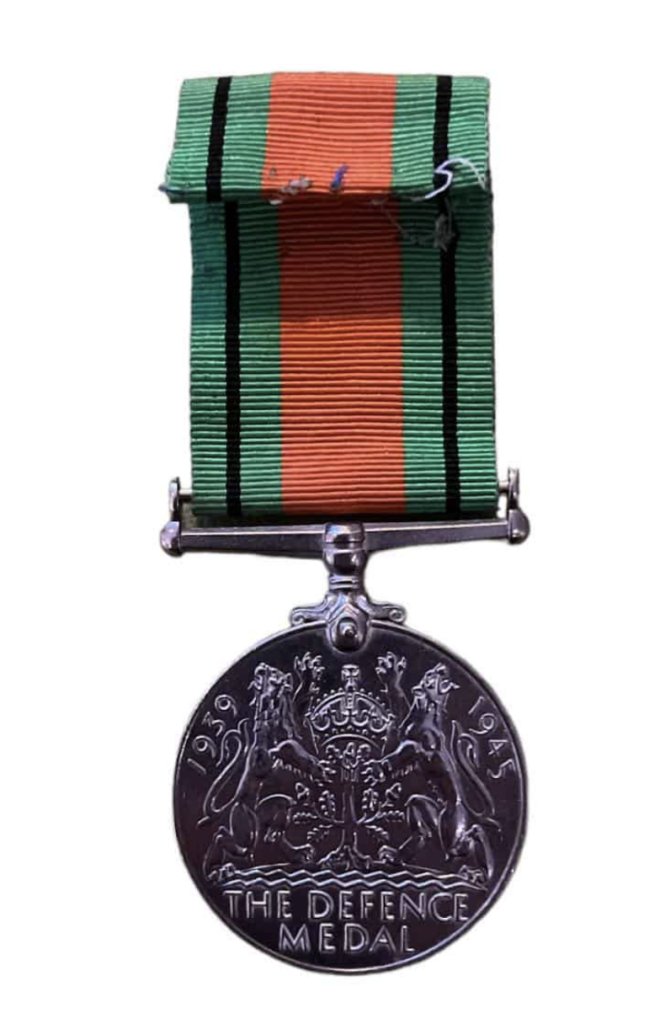
Original WW2 Defence Medal — Photo Credit: Allied Militaria
Eligible military personnel in the UK included those who served in headquarters, training bases, and airfields during the War in Europe, as well as members of the Home Guard who served from 14 May 1940 to 31 December 1944. The medal was also awarded to military personnel who served non-operational roles overseas in the Dominions of the Commonwealth and in British Colonies. The Defence Medal could also be awarded to those who qualified for one or more Campaign Star.
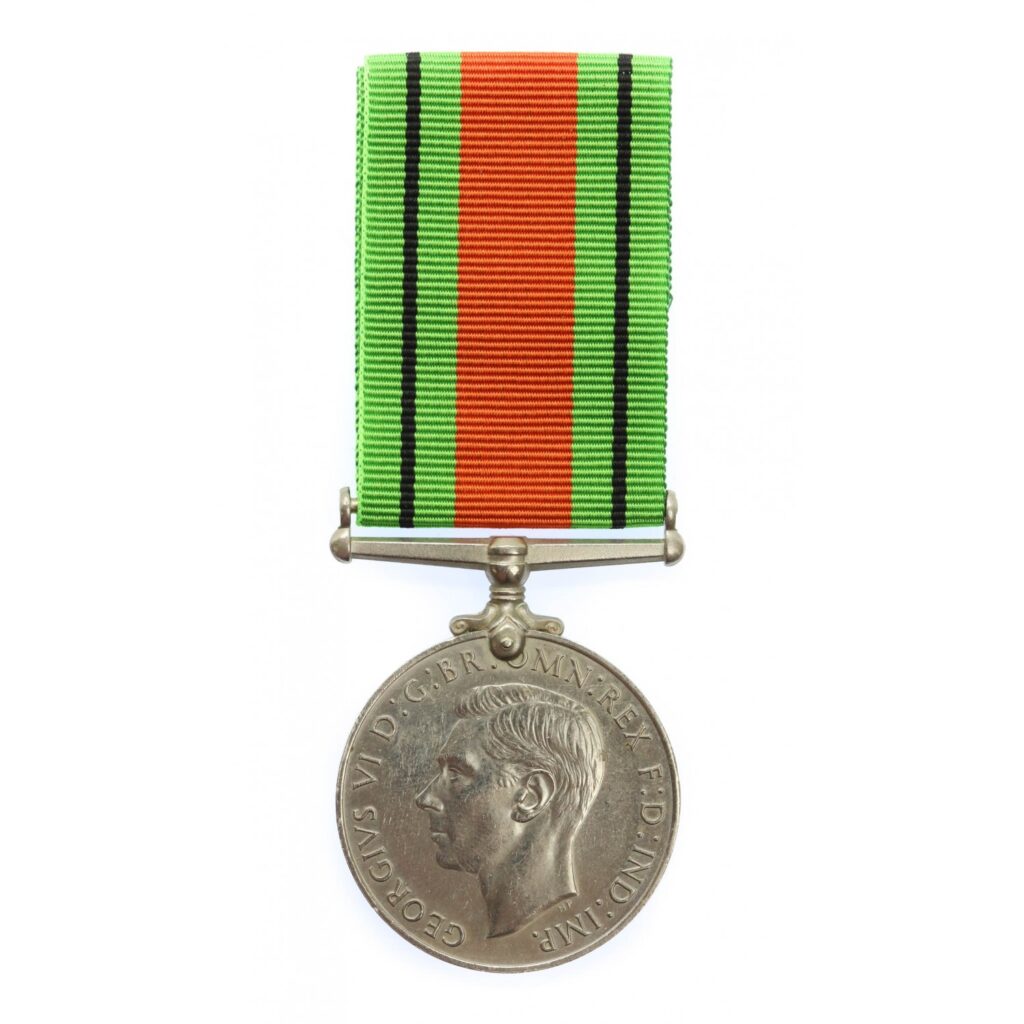
Original WW2 Defence Medal — Photo Credit: Cultman Collectables
Eligible military personnel in the UK included those who served in headquarters, training bases, and airfields during the War in Europe, as well as members of the Home Guard who served from 14 May 1940 to 31 December 1944. The medal was also awarded to military personnel who served non-operational roles overseas in the Dominions of the Commonwealth and in British Colonies. The Defence Medal could also be awarded to those who qualified for one or more Campaign Star.
In addition to military personnel, eligible civilian services in the UK included those whose members were eligible for Chevrons for war service. The Defence Medal was not awarded for operational service, and its purpose was to recognise those who contributed to the war effort in non-operational roles. Overall, there was a very long list of recipients of the Defence Medal and the list of reasons for receiving it is extensive and I have by no means covered it here.
1939-1945 Star
To be eligible for the 1939-1945 star, soldiers had to complete six months of active service, except for aircrews who had to serve for two months of operational duty. The star was also awarded to soldiers who participated in various commando operations or did not serve overseas, making it a versatile recognition of service.
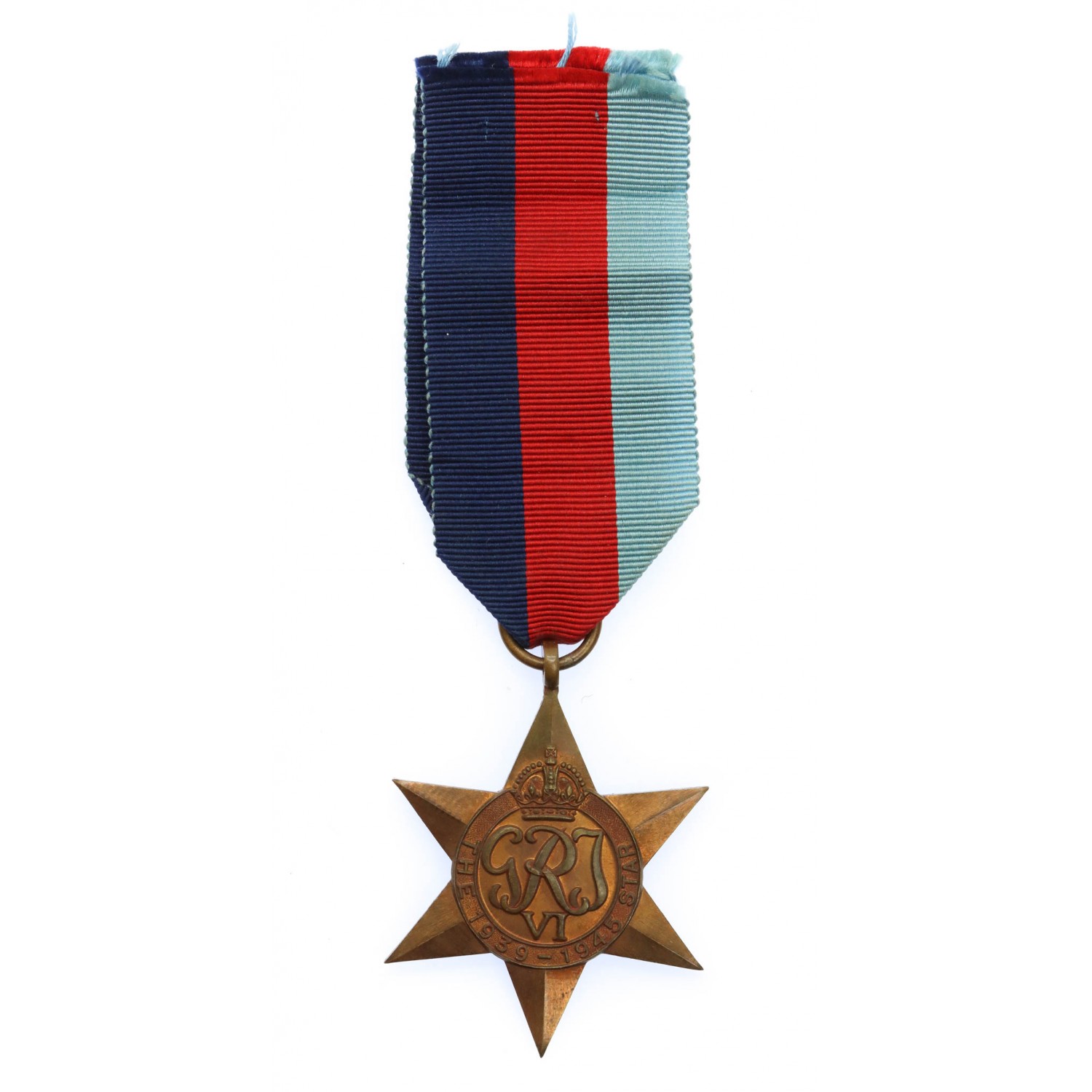
Original WW2 1939-1945 Star Medal — Photo Credit: Cultman Collectables
The 1939-1945 star's ribbon has three stripes, each representing a branch of the British armed forces. The dark blue stripe represents the Merchant Navy and Royal Navy, the red stripe represents the Army, and the light blue stripe represents the Royal Air Force. The star's design distinguishes it from other campaign stars awarded during World War II, reflecting its unique eligibility criteria and the varied contributions of its recipients.
While only one clasp was awarded with the 1939-1945 star, it held particular significance for Air Force personnel who participated in the Battle of Britain. When worn without the medal, the clasp is represented by a gilt rosette, differentiating it from the silver rosette used on other campaign ribbons.
Air Crew Europe Star
The Air Crew Europe Star was a significant recognition of the bravery and dedication of RAF aircrews who flew operational missions from Britain over Europe during World War II. Before earning this star, the recipient had to have already earned the 1939-1945 Star for their service in the war. This requirement ensured that the Air Crew Europe Star was only awarded to those who had demonstrated their commitment to the war effort through previous active service.
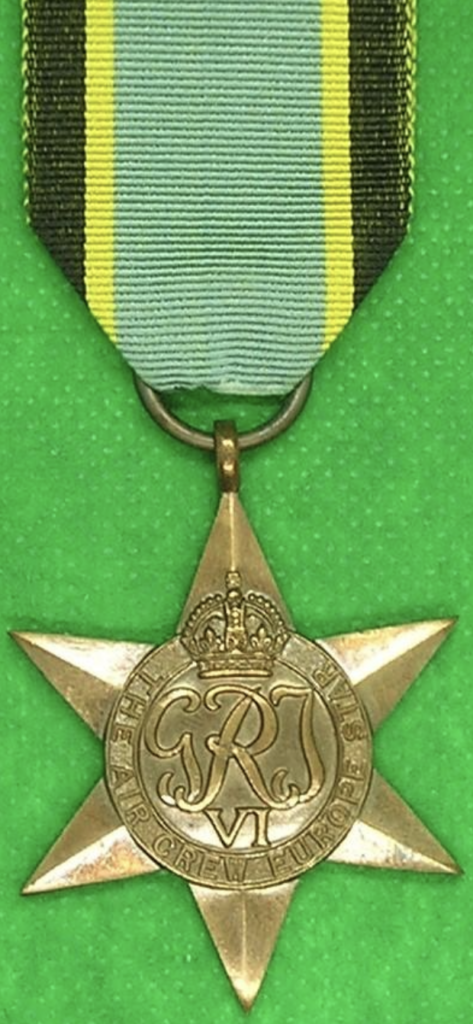
WW2 Air Crew Europe Star — Photo Credit: The Medal Centre
Personnel who went on to earn additional campaign stars, such as the Atlantic Star or the France and Germany Star, wore a clasp on the ribbon indicating the first star they earned. This practice prevented recipients from receiving multiple stars and only allowed one clasp to be worn. The ribbon of the Air Crew Europe Star features light blue with yellow and black outer stripes. These colours symbolise the continuous service of the Air Forces both by night and day.
Despite its significance, the Air Crew Europe Star is the least awarded of the eight campaign medals, making it a highly sought-after item among collectors. However, this also makes it a prime target for counterfeiters, and collectors need to be aware of the risks of purchasing counterfeit or replica medals. When the ribbon is worn without the medal, the clasps are represented by a silver rosette, allowing recipients to display their earned clasps even when not wearing the medal itself.
The Atlantic Star
The Atlantic Star has a special significance as it was awarded to those who served in one of the most challenging naval campaigns in history. The Battle of the Atlantic was fought from 1939 to 1945, and it was a critical part of the Allied effort during World War II. The Atlantic Star was awarded to those who served on the front lines of this campaign, putting their lives at risk to keep the vital supply lines open. The blue, white and green stripes were chosen to represent the colours of the Atlantic Ocean.
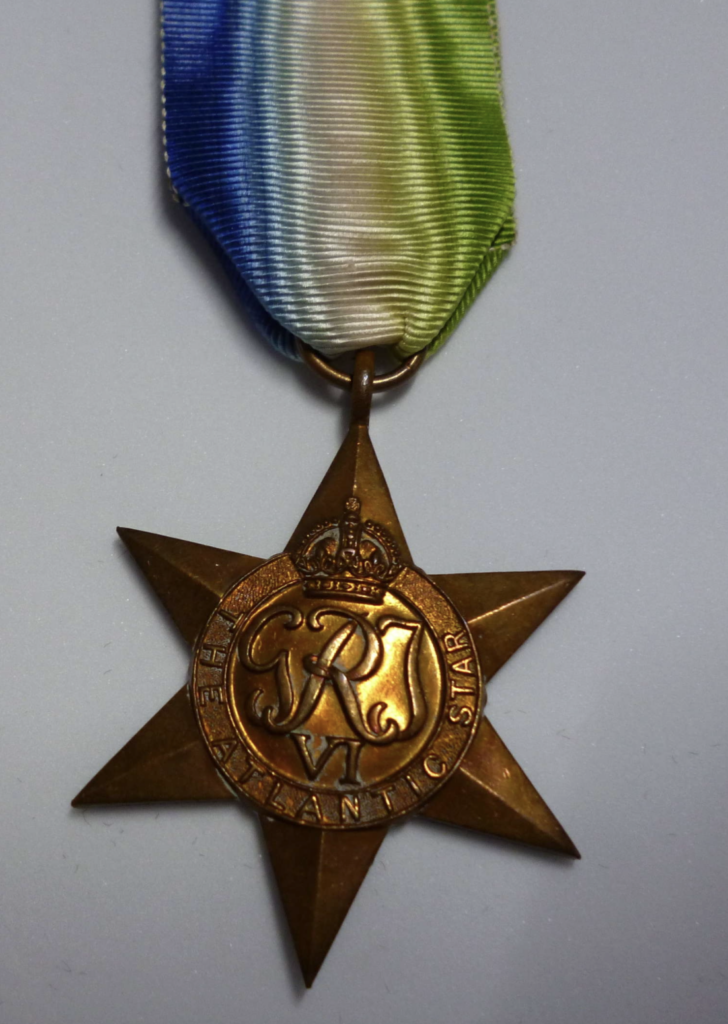
Original WW2 The Atlantic Star — Photo Credit: Chester Medals
For many of the men who received the Atlantic Star, it was a testament to their courage and dedication in the face of incredible adversity. The Battle of the Atlantic was a long and brutal conflict, and those who served in it faced constant danger from enemy attacks. Despite these risks, the sailors of the Royal and Merchant Navies persevered, and their efforts played a crucial role in the eventual Allied victory.
The Africa Star
The Africa Star was awarded to personnel who served in Africa during World War II. This medal was given to those who fought against the Italian and German forces, particularly the Afrika Korps led by General Rommel, in Egypt, Libya, Tunisia, and Morocco. Naval personnel who were part of the escort duty on the African coasts and those who served on the Isle of Malta also received this award.
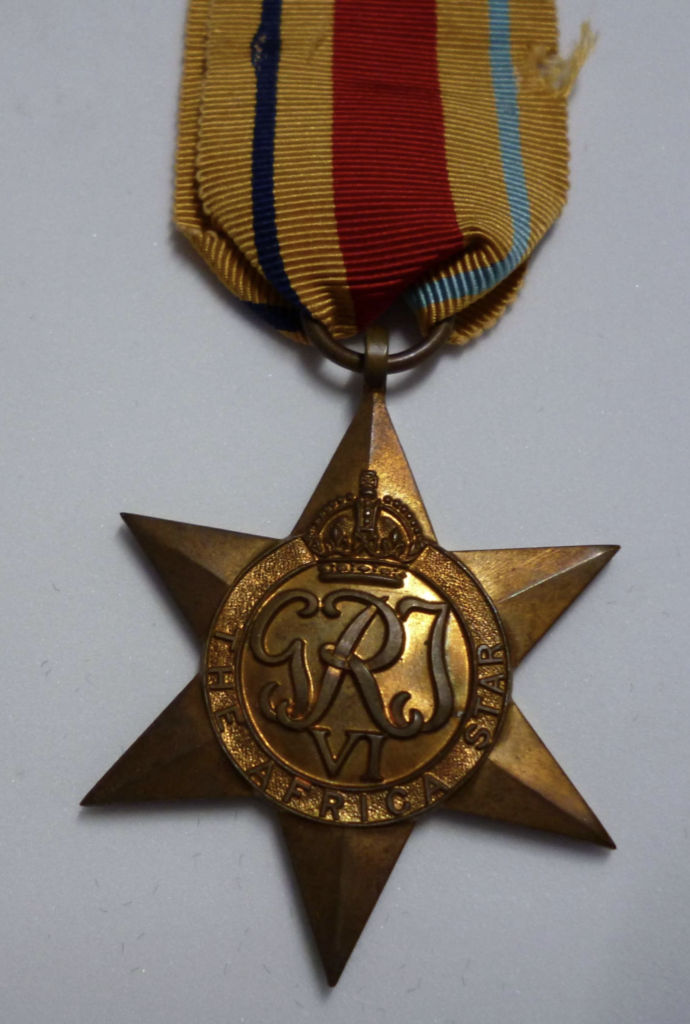
Original WW2 Africa Star — Photo Credit: Chester Medals
The ribbon of the Africa Star has the blues and reds of the three military services, with the red of the army in the center and a wider stripe. The beige background represents the African desert. This medal had three clasps awarded, but only one clasp could be worn. The Africa Star was mainly awarded to Naval personnel and RAF crews and soldiers of the 1st Army who served in Tunisia and Algeria between November and December 1942, plus troops of the 8th Army who served in the battle of El Alamein between 1942 and 1943. When the ribbon of the Africa Star is worn without the medals, the clasps are represented by a silver rosette.
The Pacific Star
The Pacific Star is a campaign medal awarded to Army, Navy, and Air Force personnel for their service in the Pacific region, including Singapore, Malaya, Hong Kong, and other areas in the Pacific during the re-taking of Japanese-occupied islands. The medal was primarily awarded to British Commonwealth forces or naval personnel engaged in the Pacific Islands campaigns. The ribbon features the colours of the three services with yellow representing the island beaches and green symbolising the jungle.
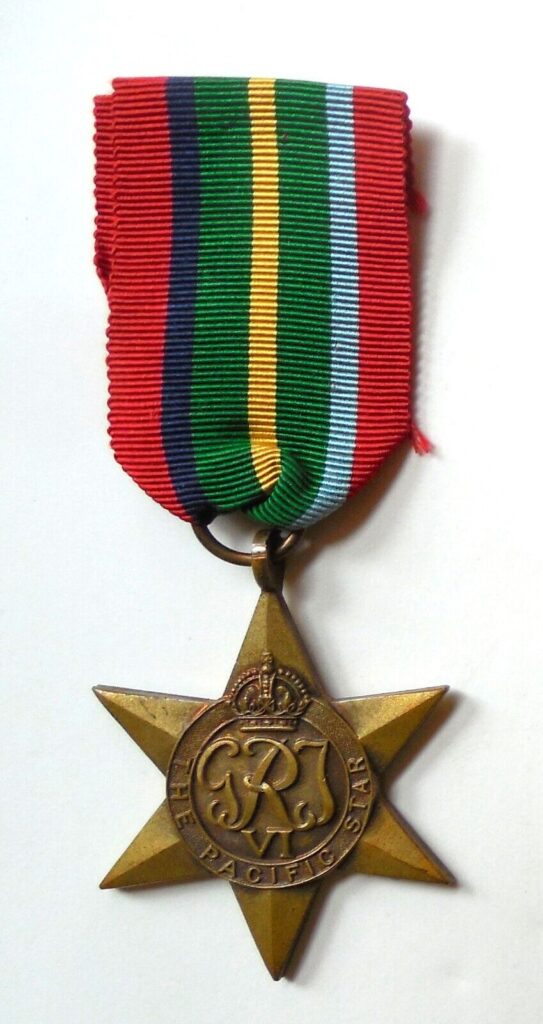
Original WW2 Pacific Star
There was only one clasp awarded with this medal, which was the Burma clasp. Personnel who received the Burma Star after the Pacific Star were entitled to wear the Burma clasp on the Pacific Star ribbon. When the ribbon is worn without the medal, the Burma clasp is represented by a silver rosette.
The Burma Star
The Burma Star was a hard-earned medal awarded to personnel who served during the fight against the Japanese in Burma. The soldiers faced challenging terrain, including the jungle, rivers, hills, and tropical climate, which were exacerbated by diseases, insects, and heat exhaustion. This star was also awarded for service in Assam, Bengal, and on the Chinese frontier. Later, it was awarded to those who served in Malaya during the re-conquest. The Burma Star was awarded to British Army, Naval, and Air Force personnel, as well as to Commonwealth forces that fought alongside them.
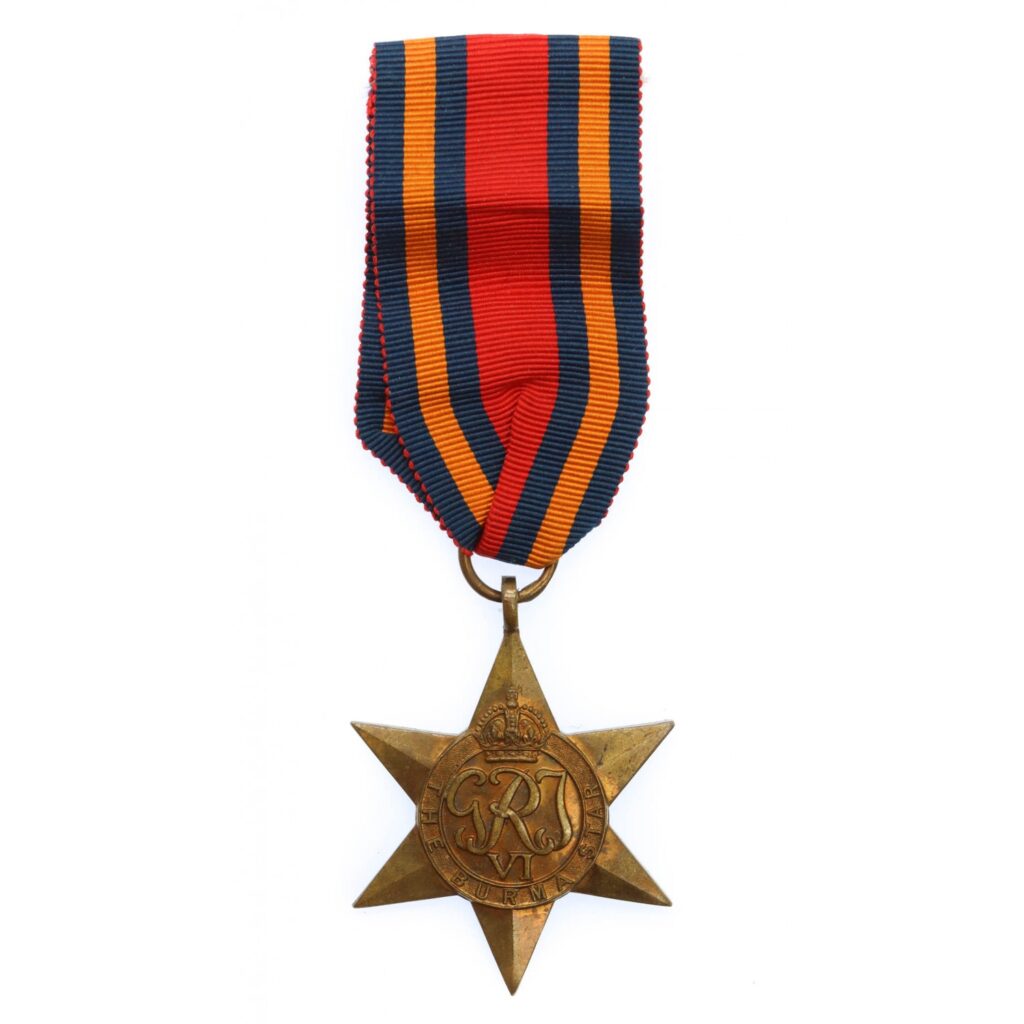
Original WW2 Burma Star — Photo Credit: Cultman Collectables
The ribbon of the Burma Star consists of broad dark blue stripes representing British forces, a red stripe for Commonwealth forces, and bright orange stripes to symbolize the sun. The Pacific clasp was the only clasp awarded with this medal, for those who served in Burma after their Pacific campaigns. When the ribbons are worn without medals, the clasp is represented by a silver rosette.
The Italy Star
The Italy Star was awarded to members of the Army, Navy, and Air Force who served in various areas such as Italy, Sicily, Pantellaria, Sardinia, Corsica, Greece, Yugoslavia, Southern France, Austria, and the Aegean. However, before qualifying for this medal, personnel had to earn the 1939-1945 Star. In cases where personnel served later in the war and didn't have enough time to earn the 1939-1945 Star, Army and RAF personnel still received the Italy Star.
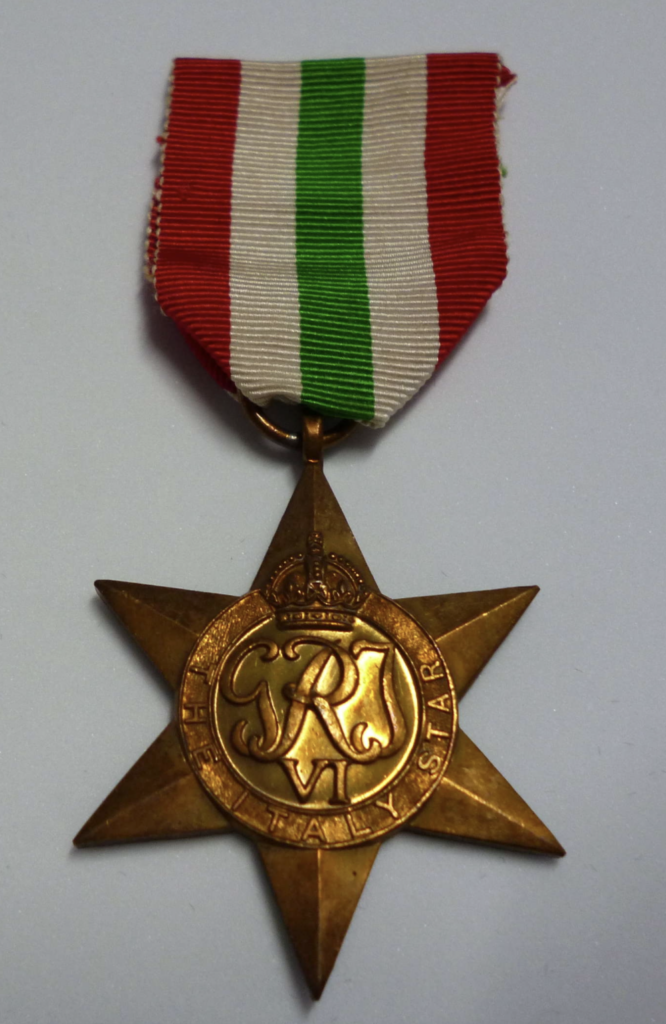
Original WW2 Italy Star Medal — Photo Credit: Chester Medals
The orange, green, and white stripes of the Italy Star ribbon represented the heraldic colors of Italy. Notably, unlike other campaign medals, no clasp was ever awarded with the Italy Star.
The France and Germany Star
The France and Germany Star was awarded to all members of the British and Commonwealth armed forces who served in northwest Europe, including France and Germany, but also Belgium and Holland, during World War II. Despite its name, the medal was not awarded for service in southern France, which was instead recognised with the Italy Star.
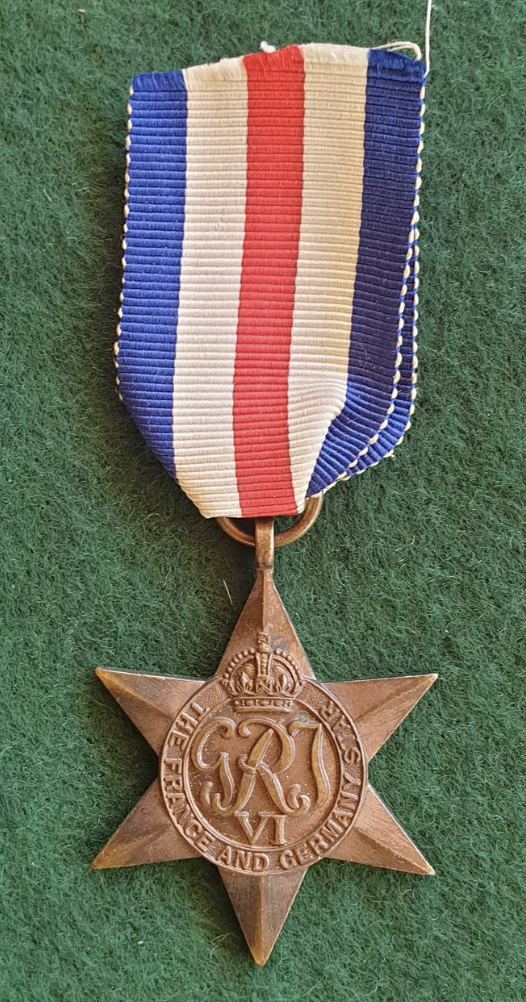
Original WW2 France & Germany Star — Photo Credit: Allied Militaria
This medal was awarded for some of the most significant operations of the war, including the D-Day landings, Operation Market Garden and the liberation of occupied countries in Europe. Personnel who later received the Atlantic Star were awarded the Atlantic clasp, the only clasp associated with this medal. Contrary to popular belief, there was no Air Crew Europe clasp awarded with this medal. The ribbon of the France and Germany Star features blue, red, and white stripes that represent the allied forces of Britain, France, and America.
The Arctic Star
The Arctic Star is a military campaign medal that was instituted by the United Kingdom in 2012 to recognize the service of British and Commonwealth veterans who served in the Arctic Convoys during World War II. These convoys were essential to keep the Soviet Union supplied with vital war material, and they faced extreme weather conditions, difficult terrain, and enemy attacks. The Arctic Star was created to honor the bravery and sacrifice of the personnel who served in these convoys and to ensure that their contribution to the war effort is not forgotten.
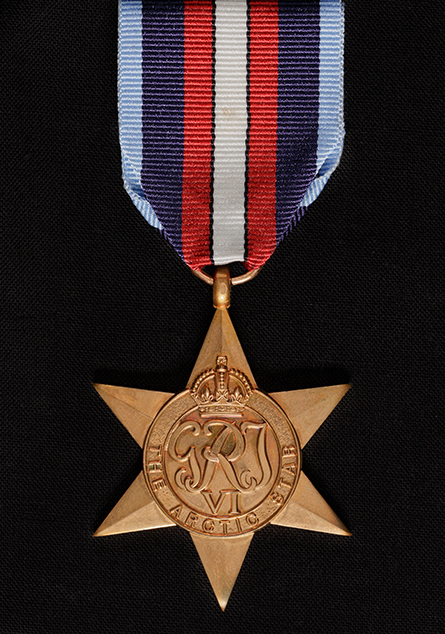
The Arctic Star — Photo Credit: Gov.uk / MOD
To qualify for the Arctic Star, veterans must have served north of the Arctic Circle on at least one occasion between the 3rd of September 1939 and the 8th of May 1945. The medal can be awarded posthumously, and it is available to both veterans and next-of-kin. The design of the Arctic Star features the Royal cipher surmounted by a crown, with a central design of a large, seven-pointed star. It is worth making clear that this medal did not exist during WW2 but was introduced almost 7 decades later to recognise the service of the brave seamen.
How many of each British Army medals were awarded for WW2?
So this is a very tough one to answer as no one seems to have a definitive list or numbers. So, after some deep dive research into a few sources, we have come up with this list. Please do not take it to be gospel truth, but an estimate to give you a general guide to rarity.
- The Defence Medal: Approximately 6,500,000 awarded
- The War Medal 1939-1945: Approximately 6,500,000 awarded
- The 1939-1945 Star: Approximately 1,600,000 awarded
- The Africa Star: Approximately 230,000 awarded
- The Burma Star: Approximately 145,000 awarded
- The Italy Star: Approximately 250,000 awarded
- The France and Germany Star: Approximately 400,000 awarded
- The Atlantic Star: Approximately 250,000 awarded
- The Air Crew Europe Star: Approximately 1,500,000 awarded
- The Pacific Star: Approximately 350,000 awarded
- The Arctic Star: Approximately 250,000 awarded
Further Reading
At The Militaria Shop, we’re collectors ourselves — and we know how much a good reference guide can help. We’ve been building out a library of guides covering everything from German helmet sizes and RZM codes to British uniform sizing and War Department stamps. We add new ones as we get the time, so there’s always something new in the works.
You can find all our guides on the Militaria Collectors Guides page, or browse a selection below.